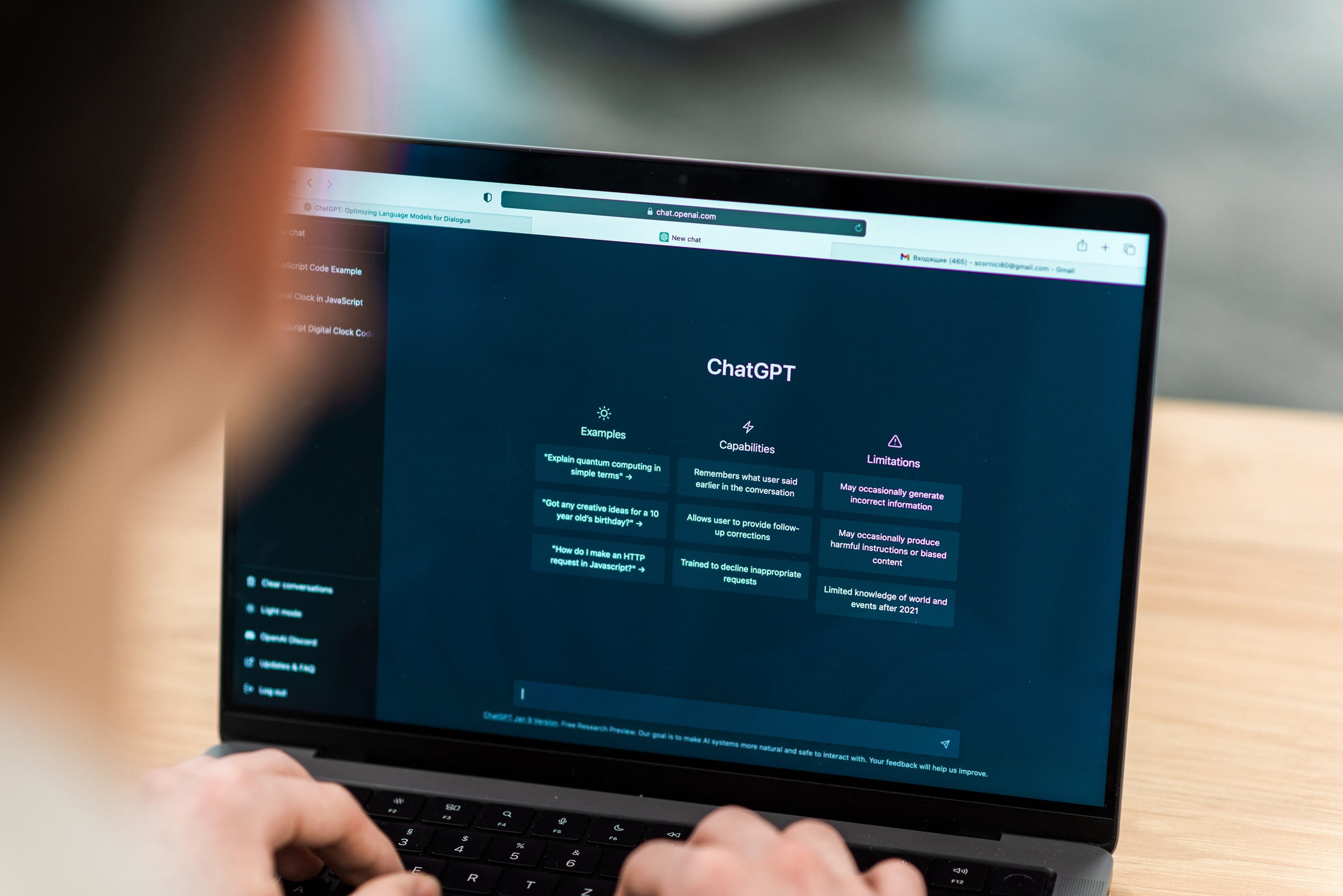
Your marketing director copies customer demographic data into ChatGPT to help write a targeted email campaign. Your CFO uploads financial projections to Claude for formatting assistance. Your HR manager asks Gemini to help draft a performance review policy. Normal Tuesday activities, right?
Here’s what most executives don’t realize: every piece of information your team feeds into consumer AI platforms becomes part of a complex data ecosystem you can’t control. The convenience is undeniable, but the business implications run deeper than most organizations understand.
Where your data goes after you hit send
When employees use consumer AI tools, they’re feeding information into systems designed to learn and improve. OpenAI’s terms clearly state they may use conversations to train future models, though they offer opt-out options buried in privacy settings. Google’s Gemini processes queries through systems that integrate with their broader data collection infrastructure.
Anthropic takes a more restrictive approach with Claude, but even they retain conversations for safety monitoring.
The technical reality gets complicated quickly. AI companies need data to improve their models, but they also face pressure to protect user privacy. Most solve this by anonymizing data or using it in aggregate, but anonymization techniques aren’t foolproof. Research consistently shows that supposedly anonymous datasets can often be re-identified when combined with other information sources.
Your business data doesn’t exist in isolation either. When your sales team asks an AI tool to analyze customer retention patterns, that information gets processed alongside millions of other queries. Pattern recognition algorithms might identify trends across industries or reveal competitive insights that individual companies never intended to share.
When productivity tools become security risks
Samsung’s semiconductor leak represents just the tip of the iceberg. Employees used ChatGPT for code review and debugging assistance, inadvertently sharing proprietary chip designs and manufacturing processes. The company quickly banned ChatGPT, but the damage was done – sensitive technical information had already been processed and potentially stored by OpenAI’s systems.
JPMorgan Chase discovered similar risks when analyzing how employees used AI tools. Internal audits revealed that staff had been feeding customer account details, trading strategies, and regulatory compliance information into various AI platforms. The bank didn’t wait for a public breach – they implemented strict AI usage policies before confidential information could be compromised further.
Amazon caught employees sharing internal business metrics and competitive analysis data with AI tools, prompting the company to develop their own internal AI systems for employee use. The concern wasn’t theoretical, competitive intelligence firms actively monitor public AI outputs for patterns that might reveal business strategies or market positions.
These cases share a common thread: employees acting with good intentions, trying to work more efficiently, without realizing they were creating massive security vulnerabilities. The information didn’t get stolen by hackers or leaked by malicious insiders, it got voluntarily shared with systems designed to process and learn from that exact type of data.
Reading the fine print on AI privacy policies
Reading through AI platform privacy policies reveals a consistent pattern: lots of disclaimers, limited guarantees, and ultimate responsibility placed squarely on users to determine what information they should share.
OpenAI’s enterprise offerings provide better data controls, including options to prevent training on customer data and enhanced security features. But their standard ChatGPT service makes no promises about keeping your information confidential. They reserve the right to review conversations for safety purposes and may use data to improve their models unless you specifically opt out.
Google’s approach with Gemini involves integration with their existing data infrastructure. While they don’t explicitly train on all user conversations, the data flows through systems connected to their broader advertising and analytics ecosystem. Enterprise customers get additional protections, but small businesses using consumer versions operate under much looser privacy frameworks.
Microsoft’s Copilot products offer varying levels of data protection depending on which service you’re using. The enterprise versions include stronger safeguards, but the consumer tools operate under standard Microsoft privacy policies that allow for data processing and analysis.
The pattern emerges clearly: AI companies offer premium protection for enterprise customers willing to pay higher fees, while consumer-level tools provide minimal guarantees. Most small to mid-sized businesses fall into a gray area where they’re using consumer tools for business purposes without enterprise-level protections.
Training programs that change real behavior
Effective AI training starts with helping employees recognize what constitutes sensitive information. This goes beyond obvious categories like customer credit card numbers or employee social security numbers. Modern business data classification needs to include project names, vendor relationships, pricing strategies, and competitive analysis – information that seems harmless individually but becomes problematic when aggregated.
Role-based training works better than generic company-wide sessions. Your accounting team faces different AI temptations than your marketing department. Accountants might be tempted to use AI for financial analysis and forecasting, while marketers might want help with campaign strategy and customer segmentation. Training needs to address the specific scenarios each group encounters daily.
Practical exercises make the difference between theoretical knowledge and real behavior change. Walk through examples of how innocent-seeming requests can expose sensitive information. Show employees how to rephrase questions to get AI assistance without sharing confidential details. Demonstrate the difference between asking for help with “quarterly sales projections for our top three clients” versus “help me format a financial report with these general categories.”
Regular refresher training becomes essential as AI tools evolve rapidly. What seemed safe six months ago might create new vulnerabilities as platforms change their data handling policies or introduce new features. Monthly brief updates work better than annual comprehensive sessions that employees forget immediately.
AI policies that balance security and productivity
Effective AI policies balance security with productivity. Blanket bans on AI tools typically fail because employees find workarounds or ignore policies entirely. Smart policies focus on data classification and approved usage scenarios rather than trying to control specific tools.
Start with clear data categories: public information that’s fine to share, internal information that requires caution, and confidential information that should never leave your systems. Give concrete examples for each category. Marketing blog content might be public, but customer engagement metrics are internal, and detailed customer profiles are confidential.
Establish approved AI tools and usage scenarios. Maybe ChatGPT is acceptable for general writing assistance but not for processing customer data. Perhaps employees can use AI for formatting and grammar checks but not for strategic analysis involving proprietary information. Clear boundaries help people make good decisions in real-time.
Implementation requires ongoing monitoring without becoming surveillance. Regular training sessions where people can ask questions about specific scenarios work better than trying to track every AI interaction. Anonymous reporting systems let employees flag potential policy violations without fear of punishment.
Policy updates need to happen frequently as AI capabilities expand. What seems impossible today might become routine next month. Build review processes that can adapt quickly to new tools and use cases.
Technology solutions for real business environments
Enterprise AI platforms solve many data protection challenges, but they come with costs and complexity that might not fit every organization. Microsoft’s Copilot for Business, OpenAI’s enterprise APIs, and Google’s Workspace AI tools provide better data controls, but they require significant investment and technical setup.
Virtual private networks (VPNs) and secure browsing environments can provide additional protection layers when employees need to use consumer AI tools. These solutions create isolated environments where AI interactions can happen without exposing broader network resources or stored data.
Data loss prevention (DLP) systems can monitor and block sensitive information from being transmitted to AI platforms. Modern DLP tools recognize patterns like social security numbers, credit card data, and proprietary terminology, preventing employees from accidentally sharing protected information.
Local AI deployments represent the ultimate solution for organizations with strict data protection requirements. Running AI models on your own servers eliminates external data sharing entirely, but requires significant technical expertise and computational resources.
The reality for most businesses involves a hybrid approach: enterprise AI tools for sensitive work, secure environments for consumer AI access, and monitoring systems to catch potential violations before they become problems.
Making smart decisions about AI adoption
The goal isn’t eliminating AI from your business operations, the productivity benefits are too significant to ignore. Smart organizations focus on getting AI benefits while maintaining data protection standards that make sense for their specific risks and requirements.
Start with pilot programs in lower-risk areas. Marketing content creation, general research, and formatting assistance represent good testing grounds for AI adoption. Learn how employees use these tools before expanding to more sensitive business functions.
Regular risk assessments help balance productivity gains against data protection concerns. Some information leaks might be acceptable if the business benefits outweigh the risks. Others could create existential threats that justify significant investment in protective measures.
The organizations handling AI adoption successfully treat it as an ongoing operational challenge rather than a one-time technology decision. They build capabilities that can evolve with changing AI landscape while maintaining consistent protection for their most valuable data assets.
Working with partners who understand both sides
At Syntech Group, we help businesses navigate AI adoption challenges because we understand both the productivity potential and the data protection requirements these tools create. Our clients want to harness AI capabilities without compromising the information security standards they’ve worked years to establish.
The AI landscape changes rapidly, and we’re committed to staying ahead of these developments. We continuously evaluate new AI tools, study emerging security frameworks, and adapt our services to address the challenges our clients face today. While nobody has all the answers in this evolving field, we’re investing in the knowledge and capabilities needed to guide our clients through safe AI adoption.
We provide the technical infrastructure and policy frameworks that make responsible AI use possible, whether you’re dealing with regulatory compliance requirements or simply protecting competitive advantages that drive your business success. As AI capabilities expand, we’re evolving our approach to ensure your data protection strategies keep pace with the opportunities and risks these powerful tools create.